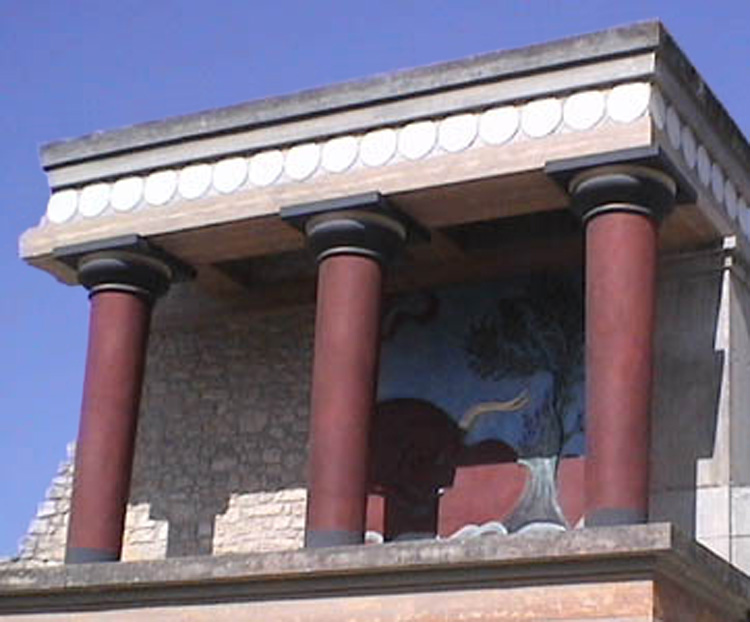
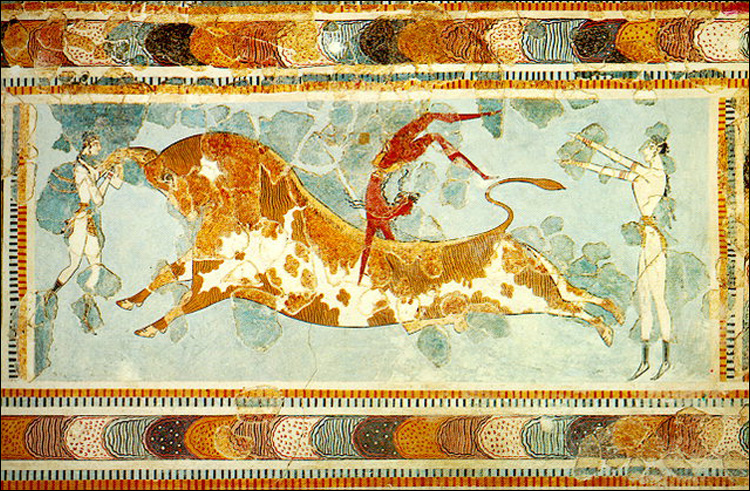
It is widely known that the beautiful Minoan palace society thrived on the large island of Crete in the Aegean Sea from roughly 2000 BC to 1500 BC. These people were known for their grand buildings, fabulous arts, written records, laws and sea trade. It is also well-established that this highly cultured society, along with the more military Mycenaean society of the mainland, was a major contributor to the Greek society which followed.
But who were these remarkable people, and from where did they come?
One school of thought suggested the Minoans simply evolved from local farmers, creating everything in their amazing society themselves. The opposing view was that many borrowings were made from older societies in the Eastern Mediterranean — the Egyptians, Phoenicians, Mesopotamians and others.
Several excellent new discoveries now make it clear who the Minoans were, and how they developed their glittering society.
An in-depth and people-oriented view of the Minoans is found in Chapters 7 to 10 of the book Phoenicians: Lebanon’s Epic Heritage. This includes many photographs, frescoes and maps which visually present this beautiful society.
Among the experts whose work contributed to this exploration are Colin Renfrew, John Cherry, Jeremy Rutter, Martin Bernal, Mary Lefkowitz, Guy Rogers, Patricia Bikai, Glenn Markoe, Lesley Fitton, Martin Nilsson, Clive Gamble, Paul Halstead, Michael Grant, Tjeerd Van Andel, Curtis Runnels, W.A. Ward, Keith Branigan, Saul Weinberg, L. Vance Watrous, James Walter Graham, Vivian Davies, Renee Friedman, Herodotus, Thucydides, Jerry Bentley, Herbert Ziegler, Miriam Lichtheim, Maurice Dunand, Sturt Manning, Philip Betancourt, B.J. Kemp and R.S. Merrillees.
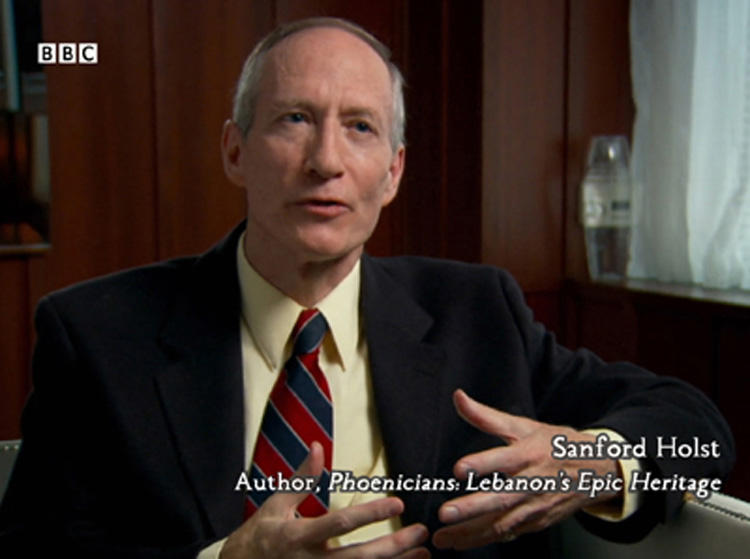
The content of this website is drawn from the research of historian Sanford Holst
Updated April 24, 2025
CLOUD: Who were the Minoans; Minoans and Phoenicians

Further information
If you would like to experience more of the Phoenician world than you find in these short articles, see the book Phoenicians: Lebanon’s Epic Heritage. This extensive exploration is brightened with 104 illustrations.
Going beyond the few traditionally-cited facts, this authoritative work draws from discussions with leading archaeologists and historians to discover new clues and lines of inquiry into this secretive society.
Phoenician Secrets
You can take a look inside this book. See the first pages here.
