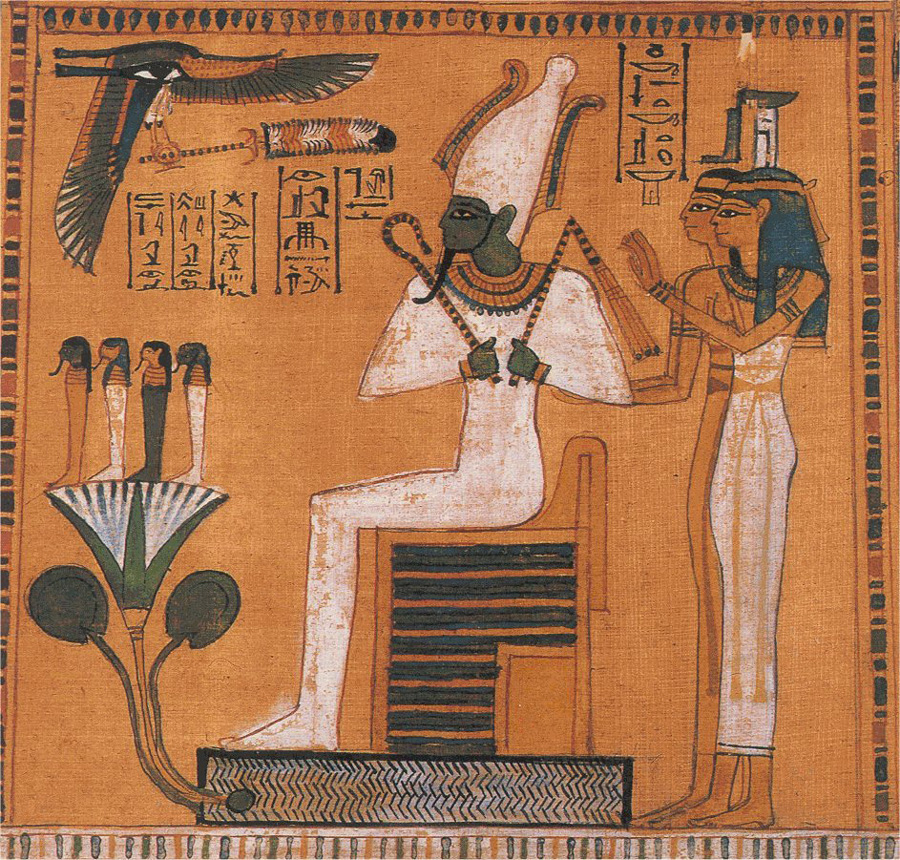
The Egyptians and Phoenicians had such a close relationship that the venerable Isis and Osiris legend of Egypt included a trip by their queen to Byblos in Lebanon to seek help in time of need. It began when her husband — the god Osiris, who was also the king — was killed by his brother Seth. The body of Osiris was sealed in a chest and thrown into the Nile River. The rest of the story is told to us by Plutarch, the Greek biographer.
Isis on [hearing] the news, sheared off one of her tresses, and put on a mourning robe, whence the city, even to the present day has the name of “Copto” (I beat the breast). . . . She learnt by inquiry that the chest had been washed up by the sea at a place called Byblus [Byblos], and that the surf had gently laid it under an Erica tree. This Erica, a most lovely plant, growing up very large in a very short time had enfolded, embraced and concealed the coffer within itself. The king of the place being astonished at the size of the plant, and having cut away the clump that concealed the coffer from sight, set the latter up as a pillar to support his roof.
They tell how Isis having learnt all this by the divine breath of fame, came to Byblus, and sitting down by the side of a spring all dejected and weeping spoke not a word to any other persons, but saluted and made friends of the maid servants of the queen, by dressing their hair for them, and infusing into their bodies a wonderful perfume out of herself; when the queen saw her maids again, she fell a longing to see the stranger, whose hair and whose body breathed of ambrosial perfume; and so she was sent for, [and] becoming intimate with the queen, was made nurse of her infant. The king’s name they say was Malacander, herself some call Astarte, others Sooses, others Neinanoë, who is the same with the Greek Athenais.
Isis is said to have suckled the child by putting, instead of her nipple, her finger into his mouth, and by night she singed away the mortal parts of his body. She turned herself into a swallow and flew around the pillar until the queen watched her, and cried out when she saw her child all on fire, and so took away the boy’s immortality. Then the goddess, manifesting herself, asked for the pillar of the roof, and having removed it with the greatest ease, she cut away the Erica that surrounded it. This plant she wrapped up in a linen cloth, pouring perfume over it, and gave it in charge of the king; and to this day the people of Byblus venerate the wood, which is preserved in the temple of Isis.
Plutarch Morals
The Isis and Osiris Legend Continues in Egypt
Isis took the body of Osiris back to Egypt where, according to legend, he went on to become god of the dead and lived in the underworld. His son Horus defeated Seth and became god of the living and protector of the pharaohs.
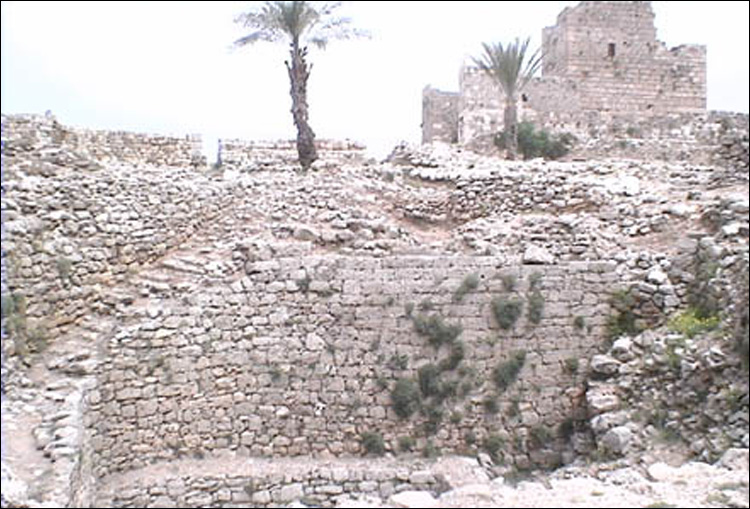
This relationship between the Egyptians and the Phoenicians of Lebanon continued for 3000 years. Since Egypt was almost entirely without wood, the strong, fragrant cedar of Lebanon became prized in the land of the Nile. It was used for burial crypts, temples, and construction of all kinds. Their trade lasted from the First Dynasty until the coming of Alexander the Great in 332 BC, as revealed by evidence still visible in Egypt and Lebanon.
These interactions give us remarkable insights into Egypt and its many dynasties, seen from the point of view of Phoenicians who were there so often during those many years.
The content of this website is drawn from the research of historian Sanford Holst

Updated April 24, 2025

Further information
If you would like to experience more of the Phoenician world than you find in these short articles, see the book Phoenicians: Lebanon’s Epic Heritage. This extensive exploration is brightened with 104 illustrations.
Going beyond the few traditionally-cited facts, this authoritative work draws from discussions with leading archaeologists and historians to discover new clues and lines of inquiry into this secretive society.
Phoenicians
You can take a look inside this book. See the first pages here.
